


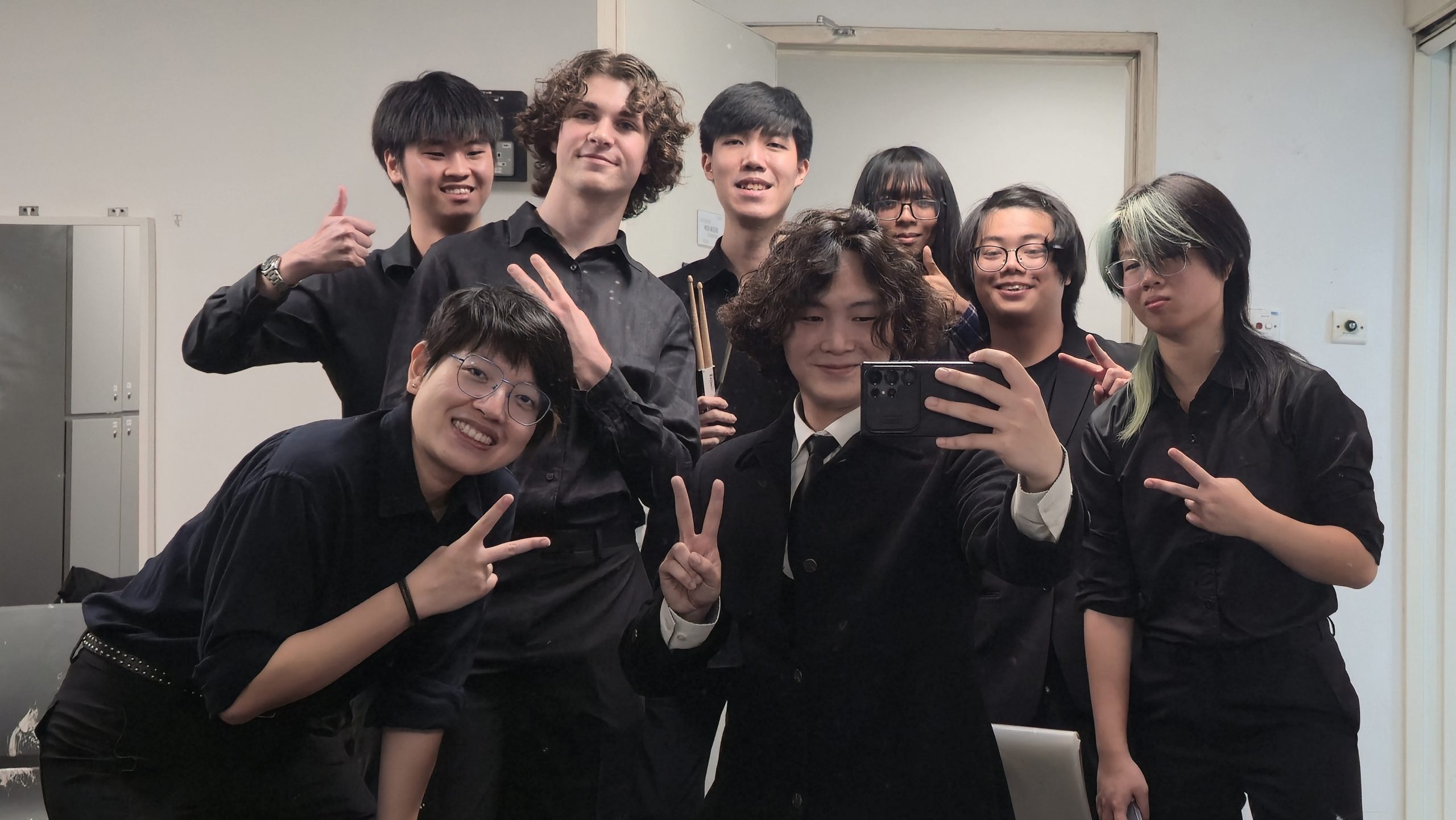
Ngiam (front row, first from right) with his friends from LASALLE.
What to expect in LASALLE: BA (Hons) Music’s Ngiam Teo on composing for games, film and his own original epic
3 Jul 2026
For his final year project, Class of 2026 graduate Ngiam Teo presented Fleeting Worlds: For The Dawn, which tells the story of Zinnia, an ordinary girl who initially rejects her destiny to save the world, before growing to embrace her role as a hero.
Containing complex lore and interconnected elements to Ngiam’s ambitious broader story universe, this epic is told through a seven-movement suite performed by a live chamber orchestra at LASALLE’s BA (Hons) Music graduate recital.
The work is a labour of love, bringing together Ngiam’s love of video games like Final Fantasy as well as his experience scoring short films and composing soundtracks for indie games.
Says Ngiam, “I imagined it as if I were designing and scoring a video game from scratch. Before writing the music, I focused entirely on the story, characters and world-building. Then I picked out key scenes in the story and imagined how they would sound if someone were playing through them within a game.”
“I referenced the structure of video game concerts I really love, and used them as the basis for my arrangements, while I drew on my game composing background, going back to my roots for the actual composition,” he explained.
Ngiam was even able to personally conduct a chamber orchestra to bring his composition to life, a unique opportunity offered only to students from the BA (Hons) Music programme’s composition and arranging specialism.
The experience was exciting but also nerve-wracking, given that composers only had one 50-minute rehearsal with the musicians which took place two days before the show.
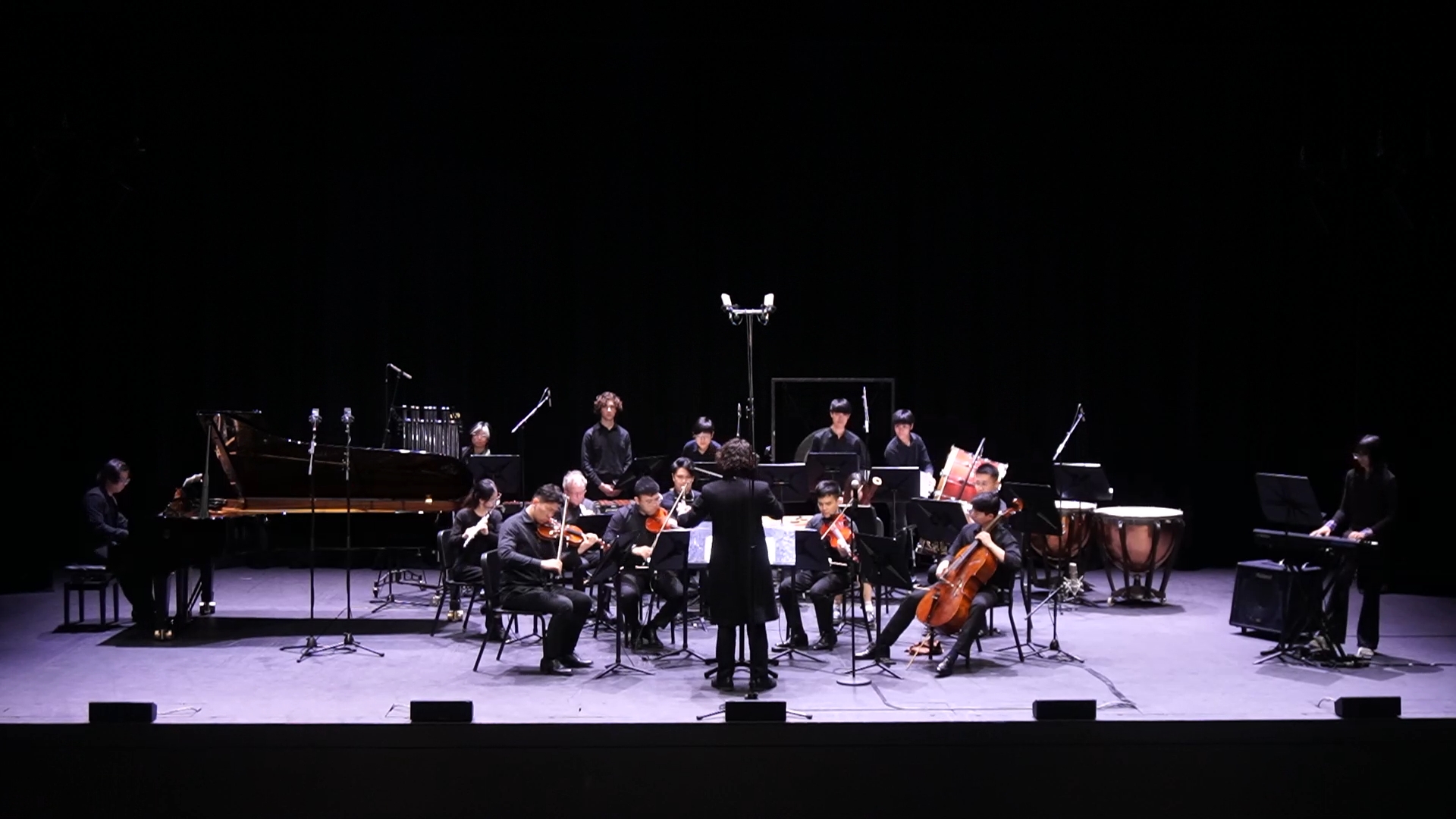
Ngiam conducting the chamber orchestra for his graduate recital.
“I always get nervous performing, and I was especially anxious for my graduation recital,” shares Ngiam. “Thankfully, the players in the chamber orchestra were incredibly nice and encouraging. Most of them are my friends too, which made collaborating feel natural and incredibly fun, and the music was everything I hoped it would be.”
We spoke to Ngiam shortly after his final recital to hear more about his process of film scoring, the difference between composing for film and video games, and why messing up is a perfectly normal part of the process.
Having scored the thesis films Mimicry 思慕四幕 and Kali’s Children, what’s the process like coming up with the soundtrack to two very different narratives? How did you work with the writers, directors and crew?
Musically they were polar opposites, yet they shared the same core messages of resilience and acceptance.
Film music exists to support the visuals and narrative, so I believe the director and crew’s vision always takes priority. Because my music equipment is highly portable, I would sit down with the director and crew, compose a quick draft on the spot, and immediately use their suggestions to improve the music.
Since Mimicry 思慕四幕 is about a young woman seeking acceptance from her deceased father, who was a tangki (a Hokkien spirit-medium), I was told to score it almost like a horror film using traditional Chinese instruments like the suona, drums and cymbals. The crew actually captured real audio recordings of chants and rituals, which I didn’t use in the end (due to superstitious fear), so I programmed my own chants instead.
Kali’s Children was about the lives of children facing the threat of losing their homes to floods. The director wanted childlike, nostalgic textures, so I used kalimbas, recorders and a toy piano. Since the documentary was filmed in Indonesia, I drew on my knowledge of gamelan instruments and scales to write the melodies.
One fun memory was testing the music with the visuals in the studio for Mimicry. On its own, the music was intense but not necessarily scary. However, during our first test cut with the music overlaid on the actual film, I was practically cowering in my seat. I’m not a huge fan of horror movies, so… (laughs)
Overall, it was an incredibly rewarding experience, and I’m thrilled to share that they were awarded Best Fiction and Best Non-Fiction Film respectively at AVANT Premiere!
You also scored the short film Mother’s Recipe (2026), how did that experience differ from your work on the thesis films?
Working with the director Izumo Kawabe and the crew was an amazing experience! It was the first time I was officially on a film set, which allowed me to pick up new production skills and make great friends. Izumo and I have similar tastes and visions for the film, so working on the soundtrack felt very organic and genuine. We drew heavily on our favourite soundtracks and films for inspiration too.
Because Mother’s Recipe is about the unexpected friendship between a lonely Japanese boy and a local boy working at a Singapore hawker centre, I wrote the main theme based on ‘connection’ and built the entire soundtrack around it.
It starts as a piano-heavy score to reflect isolation, and builds into a full ensemble piece at the end, symbolising the emotional development and the bridge these two characters built together.
I worked on the music right up till the day before the film’s Singapore premiere, and seeing everything come together was truly heartwarming. It’s also my first time scoring a film that is being screened internationally, which is incredibly exciting. I can’t wait to see where it goes!
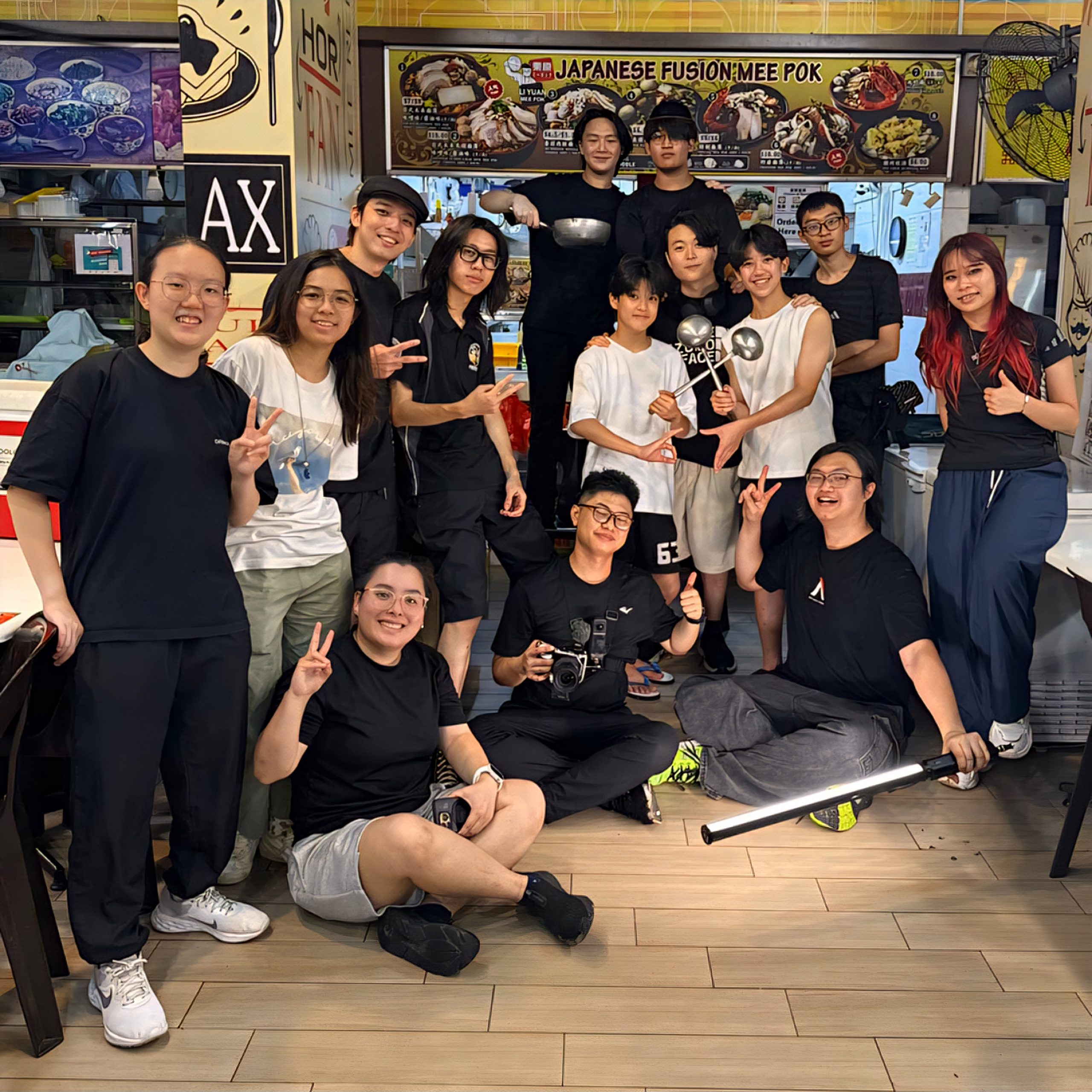
Ngiam (back row, left) with the cast and crew of Mother’s Recipe.
Does your approach to ideation and composition change depending on the medium?
Not really. Regardless of medium, my music is almost always focused on a narrative, even in standalone works.
However, the technical execution definitely changes. Films require a lot more attention to detail because the music has to move perfectly with the visuals. After the initial drafts, I carefully adjust the timing to what’s happening on the screen and make micro-edits where needed. This makes film music feel more ‘human’ sometimes, because you have to score accordingly to those raw, lingering or quieter cinematic moments.
Game music is a bit different, even though modern games can be just as cinematic as movies nowadays. The biggest shift is that game music requires interactivity and adaptability based on player action. On occasion it also needs to loop seamlessly or change dynamically, so balancing that restriction with the overall creative style of the game can be a challenge.
In the end, it comes down to experience and what feels right, as long as the audience connects with and enjoys the work. That’s what matters most.
You seem to love Final Fantasy! What other types of media inspire you? Why do you think it’s important for fellow creatives to experience worlds beyond their immediate vicinity or reality?
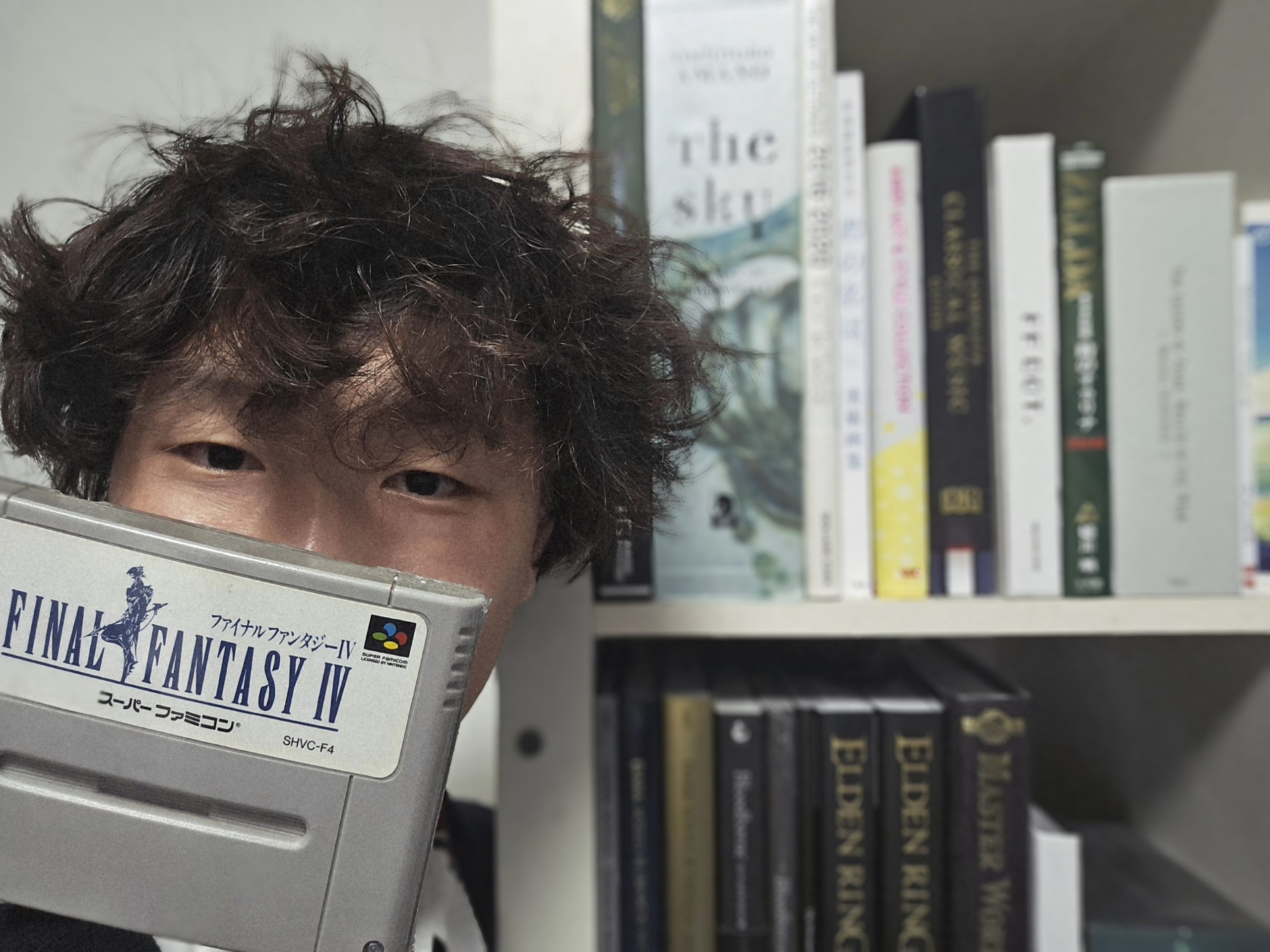
Ngiam with his treasured 1991 edition of Final Fantasy IV, in front of a bookshelf of other fantasy references which have informed his work.
Yes! I do enjoy Final Fantasy, especially IV, the 1991 edition released for the Super Famicom, and all other retro Square Enix games.
I’m also a huge fan of The Legend of Zelda, which I did my dissertation on, and classic Ghibli films, with Princess Mononoke being my favorite.
I think it’s important for everyone, not just creatives, to experience things outside of their bubble in order to discover and understand both the world and ourselves. It helps us see how everything is connected and teaches us to be more accepting. Of course, it also allows us to be inspired and to learn new skills whenever we can.
And with what we have learned, we can then express our ideas through our art, or support each other in our own ways.
What’s next for you?
I’m currently working on the soundtracks for two films and a video game, while continuing to expand on my WORLDS project both narratively and musically!
Beyond that, I plan to travel to explore what the world has to offer and pick up new skills along the way.
Do you have any words of encouragement for young musicians hoping to advance their music studies?
Although I usually say ‘do it with heart’, my main advice would simply be to ‘have fun’!
People sometimes forget that music is not just about strictly following the tempo or playing the correct notes. It’s also about expression, feelings, emotions, stories and ideas. People listen to music to create a mood or to enjoy themselves, so it is only natural for musicians to feel the same while creating music.
Experimenting and making mistakes is part of the process and it’s okay to mess up. Sometimes there might be an unexpected bit of inspiration to be found inside those experiments and mistakes too!
Pursuing music as a career can definitely be a bit intimidating, especially in a pragmatic environment. However, I believe that everyone can achieve their dreams eventually if they keep working towards them in their own unique way.
Related stories
Trip report
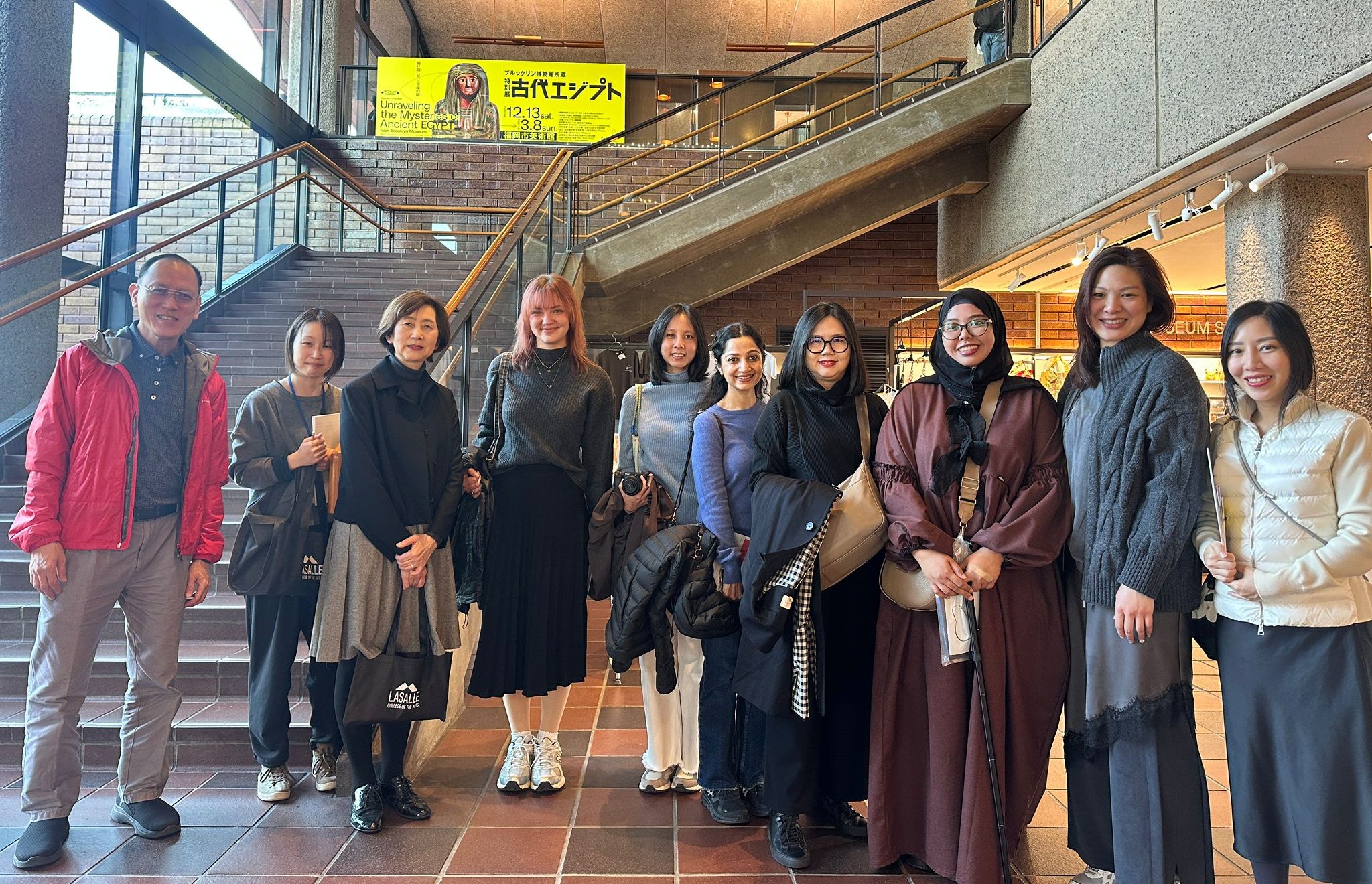
Memories of Museums, Matcha and mono no aware (物の哀れ): MA Asian Art Histories 2026 study trip to Fukuoka, Japan
4 Aug 2026
By Kendall Fosse and Aparupa Saha At the beginning of the academic year, when the 2026 cohort of LASALLE’s MA Asian Art Histories programme was told about a planned study …
What happens after art school
What happens after art school: Diploma in Audio Production alumna Hidayah Azman
3 Jul 2026
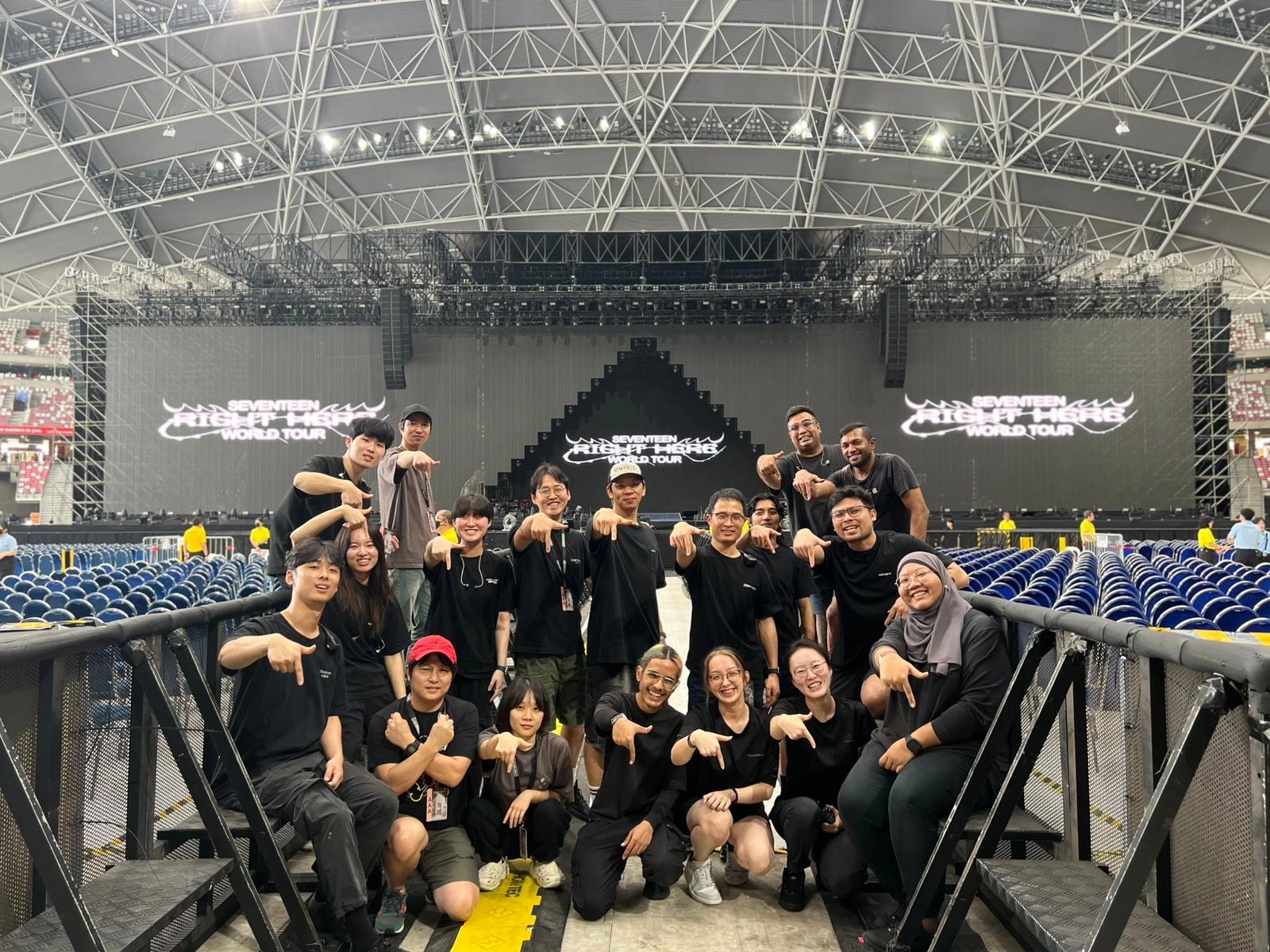
Sound engineer and Diploma in Audio Production alumna Hidayah Azman has worked with an impressive list of artists. Coldplay, Harry Styles, Imagine Dragons, Seventeen, Blackpink, Twice, Mayday and Jay Chou …
Trip report
BA (Hons) Arts Management students explore Dublin on COIL Plus+
3 Jul 2026
By Amila Khairana My Year 2 classmates, Vera Tan and Stella Ong, and I travelled to Ireland in June 2026 to participate in a prestigious research symposium organised by the …
What happens after art school
What happens after an MA: MA Arts Pedagogy and Practice alumni Yazid Jalil and Rafi Dean
29 Jan 2026
LASALLE’s MA Arts Pedagogy and Practice programme typically brings together practitioners and educators from a wide range of backgrounds. With unique opportunities for cross-pollination across disciplines, as well as an …